

OpTeC Colloquium
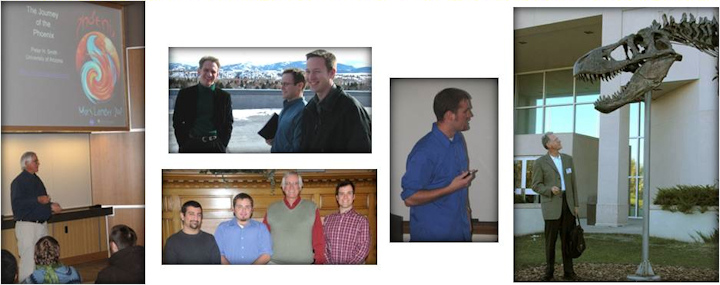
OpTeC sponsors a colloquium throughout the academic year. This is a forum where a wide range of optical science and engineering topics are discussed at a level that can be understood by a broad spectrum of optics students, staff, and faculty. The primary purposes are to train students to give effective scientific talks and to promote cross-disciplinary interactions of students, staff, faculty, and local industry employees. Speakers include MSU students, staff, and faculty, and visitors from external universities, research labs, and companies.
Charge Distributions of Levitated Microdiamonds: Toward a Test of
Quantum Gravity
Download the flyer here
April 30, 2026
4:10 pm
Norm Asbjornson Hall
Room 149
on the Montana State University Campus
Join with Webex
|
|
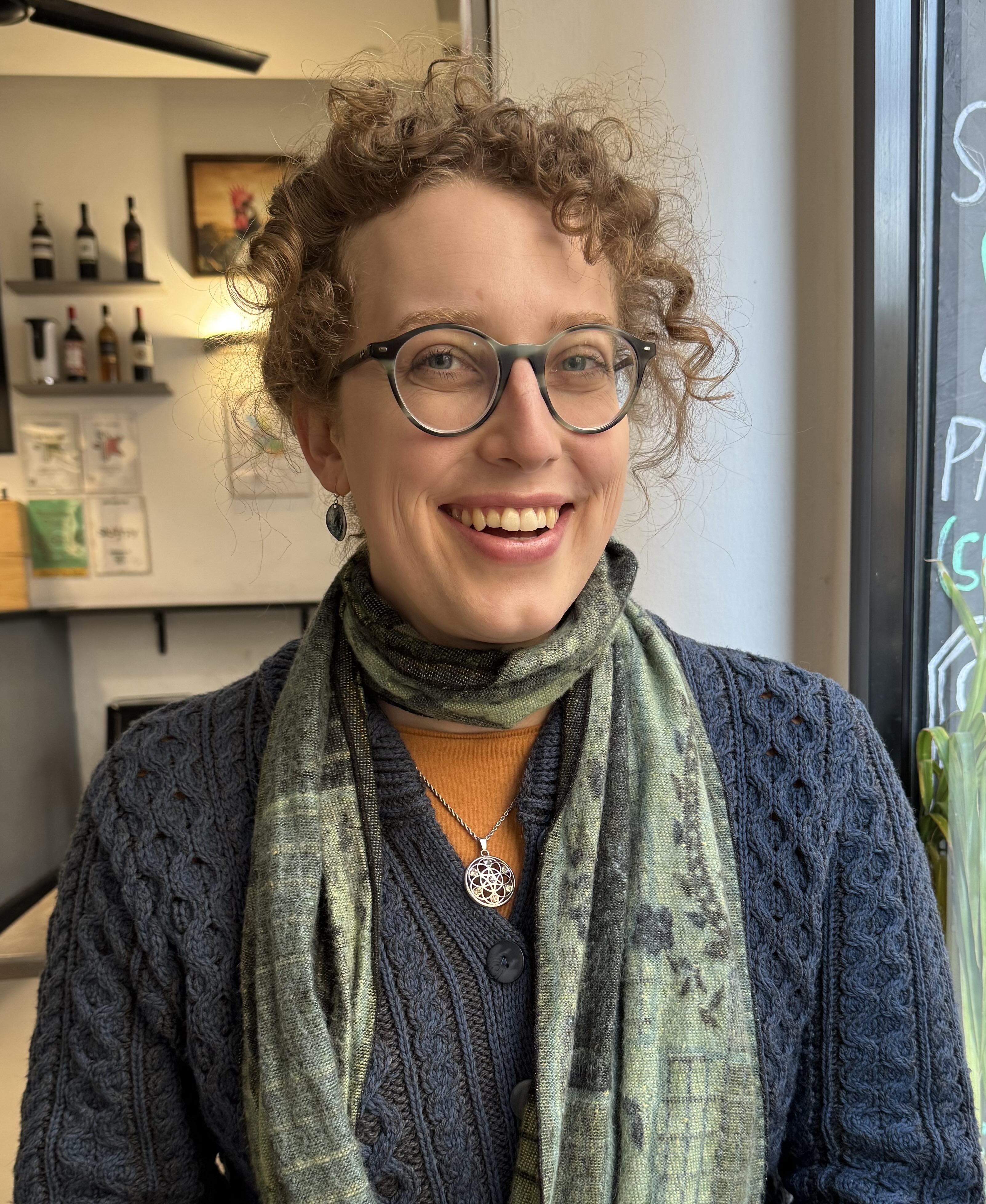
Aaron Markowitz, Ph.D.
|
Abstract
Unlike the other fundamental forces, gravity has resisted a complete quantum mechanical description, and whether spacetime itself must be quantized remains experimentally untested. A tabletop experiment using levitated microparticles may shed light on this: if two nearby masses, each placed in a spatial superposition via a Stern-Gerlach-like protocol, become entangled through their gravitational interaction alone, it would provide strong evidence that gravity is quantum mechanical. This is the goal of the QGEM protocol (quantum gravity-induced entanglement of masses), pursued by the MAST-QG collaboration (Macroscopic Superpositions Towards Witnessing the Quantum Nature of Gravity).
A dominant experimental challenge is that electrostatic interactions between the particles are expected to be several orders of magnitude stronger than gravity at the relevant length scales, generating spurious electromagnetic entanglement that would mask any gravitational signal. Building on the magneto-gravitational trap design developed by Prof. Brian D’Urso’s group, we have constructed an apparatus for levitating diamagnetic microparticles — including microdiamonds hosting single nitrogen-vacancy (NV) center spins — in high vacuum. Our trap provides sensing and control of both the particle’s charge and center-of-mass motion, which we have cooled to near the Kelvin level using all-optical feedback. We are now making the first direct measurements of the electric dipole moment of levitated microdiamonds, which will directly inform strategies for materials development, dynamical decoupling, and electrostatic screening on the path toward a viable QGEM experiment.
Biography
Dr. Aaron Markowitz is a postdoctoral researcher in Prof. David Moore’s group at Yale University’s Wright Laboratory, where they study levitated optomechanics and precision measurement. They received their B.A. in Physics and Mathematics from Harvard University in 2016 and their Ph.D. in Physics from the California Institute of Technology in 2023 under the supervision of Prof. Rana Adhikari, where their work spanned silicon microfabrication, cryogenic mechanical loss measurement, and developing quantum-noise-limited measurement techniques for gravitational wave observatories and other quantum optical sensors. They joined Yale in 2024 to pursue tabletop tests of the quantum nature of gravity.
Past Speakers
| Date | Speaker | Group | Summary |
|---|---|---|---|
| 4/23/2026 |
Amirhossein Hasani |
MonArk Quantum Foundry |
Montana’s Photonics Workforce Roadmap: Preparing for Growth and Scale |
| 3/26/2026 |
MSU Alumni Panel from PHIX |
PHIX |
Careers in Optics and Photonics: |
| 3/5/2026 |
Caleb Rohn |
Spectrum Lab, MSU |
Structured Light: Laguerre-Gaussian Modes, Orbital Angular Momentum, and Their Roles in Free-Space Optical Systems |
| 2/26/2026 |
Meredith Kupinski |
Wyant College of Optical Sciences, |
Tracking the Sky’s Neutral Point Positions for Atmospheric Turbidity |
| 12/4/2025 |
Nick Holom |
Senior Economist, |
Montana’s Photonics Workforce Roadmap: Preparing for Growth and Scale |
| 11/20/2025 |
Farshina Nazrul Shimim |
Precision Agriculture Montana State University |
From Satellites to Soil: ML-driven Daily Crop Water Predictions |
| 7/10/2025 |
Jenn Cable |
Thorlabs, Inc. |
A view inside a leading photonics industry player: Learn how a career in the photonics industry can be fulfilling and fun |
| 6/30/2025 |
Trent Berg |
Aurora |
A Montana Story: Farming to Photonics |
| 5/1/2025 |
Tomasz S. Tkaczyk |
Rice University |
Development of the next generation of biophotonic/photonic imaging systems |
| 2/20/2025 |
Meredith Kupinski |
University of Arizona |
Tracking the sky's neutral point positions for atmospheric turbidity |
| 1/23/2025 |
Andrew Oliver |
Montana State University |
Productization: Peeling the Onion or How to design and build millions of high-quality devices |
| 10/24/2024 |
Patrick Franzen |
SPIE |
Scholarly Publishing in 2024: A publisher's perspective |
| 9/12/2024 |
Jed Hancock |
Space Dynamics Laboratory, Utah State University |
Exploring Atmospheric Gravity Waves: NASA's Atmospheric Waves Experiment on the International Space Station |
| 6/13/2024 |
Matthew Birkebk |
Labsphere |
Fundamental Calibrations for Remote |
| 11/30/2023 |
Stefan Heinemann |
PHIX, North America |
Packaging technologies of integrated photonics for quantum technology |
| 4/27/2023 |
Allison Barto |
Ball Aerospace |
Engineering Discovery: Building NASA's James Webb Space Telescope |
| 3/30/2023 |
Thomas Coleman |
Silixa, LLC |
Fiber optic distributed sensing for environmental and infrastructure monitoring |
| 3/23/2023 |
John Howell |
Chapman University |
Doppler Gyroscopes: Do we really understand the gyroscope? |
| 2/16/2023 |
Krishna Rupavatharam, Ph.D. |
Spectrum Lab |
Perspectives on the evolution of microwave and quantum photonics at Spectrum Lab |
| 2/9/2023 |
John W. Sheppard, Ph.D., FIEE |
MSU Gianforte School of Computing |
Demystifying machine learning through eXplainable AI |
| 1/26/2023 |
Finland Photonics |
Finnish Photonics Cluster |
Photonics in Finland |
| 12/8/2022 |
Nicholas Borys. Ph.D. |
MSU Physics |
An introduction to the MonArk NSF Quantum Foundry |
| 10/12/2022 |
Alex Hills |
Carnegie Mellon University |
Mitigating LEO-to-GEO satellite interference |
| 4/14/2022 |
Stephen Schultz |
Brigham Young University, Electrical & computer Engineering |
Dynamic measurement of soft body armor using optical fiber sensing |
| 3/31/2022 |
Bradley Whitaker |
MSU Electrical & Computer Engineering |
How machine learning can help scientists who shoot fish and insects with lasers |
| 2/24/2022 |
Tom Hausekn |
Optica |
Hot topics in optics and photonics |
| 2/25/2021 |
Jim Webb1 & Scott Wohlstein2 |
1 G.L. Services, Hertfordshire, England |
Using the LaserSafePC software for laser safety calculations |
| 2/4/2021 |
Brian D'Urso |
MSU Physics Department |
Towards precision pulsed levitated optomechanics in a magneto-gravitational trap |
| 1/21/2021 |
Wataru Nakagawa |
MSU ECE Department |
Nanophotonics Applications and Sabbatical Exploration |
| 1/14/2021 |
Nathan Kuehl Bryan Scherrer |
MSU Physics and ECE Departments | Kuehl: Troubleshooting, repair and calibration of Burleigh WA-1500 Wavemeter. Scherrer: Model and simulation of wing-beat modulation lidar for making 3D maps of flying insects . VIDEO |
| 11/19/2020 | Dr. Charles Kankelborg | MSU Physics Department |
Designing a far ultraviolet spectrometer for the sun as a starAbstract |
| 11/12/2020 | Dr. Ioannis Roudis | MSU ECE Department | Nonlinear noise in coherent optical communications systems Abstract |
| 4/09/2015 | Dr. James G. Wessel | Seagate Corporation | Hard Disc-Drive Recording |
| 3/19/2015 | Dr. Jake Jacobsen | Synopsys, Optical Solution Group | A review of optical design software at Synopsys |
| 2/05/2015 | Dr. Mark A. Wistey | ECE Department, University of Notre Dame | Paths to record lasers and solar cells--and on cheap silicon |
| 11/24/2014 | Dr. Olav Solgaard | ECE Department, Stanford University | Miniaturized endoscopes and implantable sensors for in-vivo studies of cancer biology |
| 11/6/2014 | Dr. Kirk Knobelspiesse | NASA Ames Research Center | Cloud thermodynamic phase detection with polarimetrically sensitive passive sky radiometers. |
| 10/30/2014 | Dr. Kris Merkel | President & CEO S2 Corporation, Bozeman, MT | S2 Extreme Bandwidth Analyzer and Correlator (EBAC):Updates on Improvements and Demonstrations |
| 11/14/2013 | Dr. Upendra Singh | NASA Langley Research Center | Development of a pulsed 2-micron integrated-path differential absorption lidar for CO2 measurements |
| 10/31/2013 | Qing Gu | University of California - San Diego | Semiconductor nanolasers for dense chip-scale integration |
| 9/16/2013 | Dr. Jim Schwiegerling | College of Optical Sciences - University of Arizona | Leading edge optics for optimizing vision |
| 5/14/2013 | Dr. John Egan | Advanced Photonic Crystals | The benefits of low temperature hydrothermal crystal growth |
| 4/25/2013 | Dr. Edwin ("Ted") Heilweil | National Institute of Standards and Technology (NIST) | Time-resolved terahertz studies of carrier dynamics in P3HT and zinc-phthalocyanine/C60 nanolayered thin films |
| 2/26/2013 | Dr. Larry Johnson and Dr. Mark Carroll | Newport Corporation | Part 1. Overview of laser diode technology and applications; Part 2. Job opportunities and desired skills for graduates at Newport/ILX Lightwave |
| 2/8/2013 | Dr. Toralf Scharf | Institute of Microtechnology, Ecole Polytechnique Federale de Lausanne, Switzerland | From achromatic microlenses to submicron focusing: physical optics at the micro-scale |